
The Bombay High Court has ruled that a railway passenger injured while under the influence of alcohol is not entitled to compensation under the Railways Act, 1989, even if the incident otherwise qualifies as an “untoward incident.”
In Harish Narayan Suvarna v. Union of India, Justice Jitendra Jain dismissed an appeal challenging a 2014 decision of the Railway Claims Tribunal, Mumbai, which had rejected a compensation claim arising out of a railway incident in 2001.
Background of the Case
The injured passenger had approached the Railway Claims Tribunal seeking damages for injuries sustained in the early hours of March 10, 2001. According to court records, he was waiting on a platform around midnight for a train to Borivali when he was hit by an approaching train and seriously injured.
Railway staff initially took him to a government hospital and later shifted him to Bombay Hospital for further treatment.
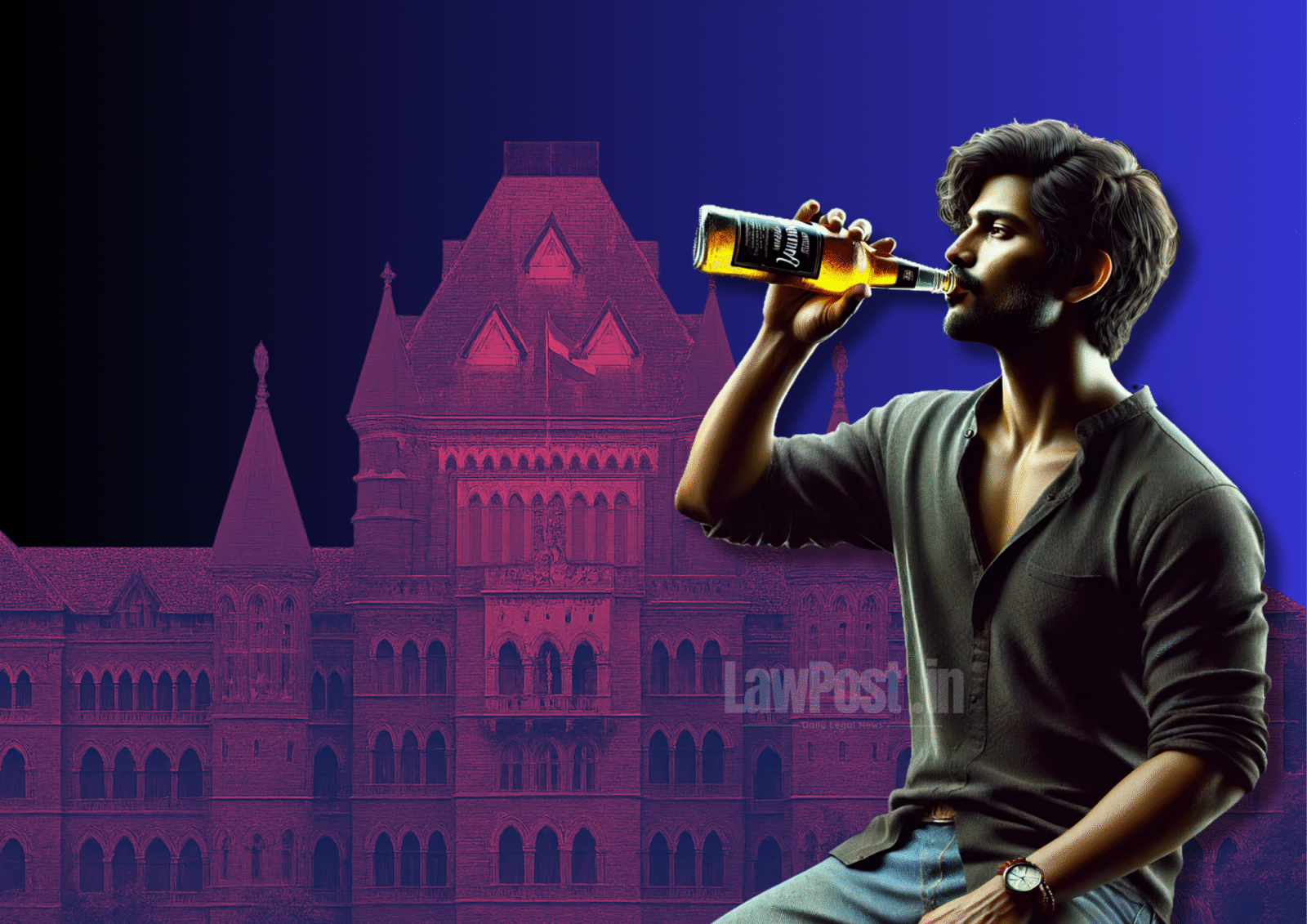
Medical records from Bombay Hospital indicated that the passenger had consumed four large pegs of alcohol before dinner. The High Court noted that this statement was recorded at the time of treatment based on the patient’s own disclosure and was never disputed during the proceedings.
Tribunal’s Decision and High Court’s View
The Railway Claims Tribunal had rejected the claim on the ground that the passenger had been “knocked down,” holding that the incident did not qualify as an “untoward incident” under the law.
However, the High Court disagreed with this reasoning. Justice Jain observed that the passenger was not crossing the railway tracks but was standing near the edge of the platform when the train arrived. The Court held that such circumstances could fall within the scope of an accidental railway incident.
Despite this finding, the Court proceeded to examine the proviso to Section 124A of the Railways Act, 1989, which bars compensation if the injury occurred due to acts committed in a state of intoxication.
Court’s Reasoning on Intoxication
The Court held that consuming a substantial quantity of alcohol amounted to intoxication and that standing close to the platform edge in such a condition constituted risky conduct directly connected to the injury.
The Court observed:
“Alcohol ruins, it ruins everything…. Physical and mental health, relationships, causes family breakdown, social dysfunction, career disruption and has severe long-term lifestyle consequences. I am reminded of this quote by F. Scott Fitzgerald ‘First you take a drink, then the drink takes a drink, then the drink takes you’.”
Justice Jain reasoned that intoxication can impair judgment and contribute to dangerous conduct, and therefore falls within the statutory exclusion provided under the Railways Act.
Distinguishing Earlier Judgments
The injured passenger’s counsel relied on earlier cases in which compensation had been granted despite references to alcohol consumption.
However, the High Court distinguished those decisions, observing that in those cases there was no confirmed medical evidence establishing intoxication. In the present matter, the hospital record clearly reflected alcohol consumption, and the statement had not been challenged.
Final Outcome
While the High Court held that the incident could qualify as an “untoward incident,” it concluded that the statutory bar relating to intoxication applied in this case. Accordingly, the appeal was dismissed.
Advocate Sainand Chougule appeared for the injured appellant. The Western Railways were represented by advocates Chetan C. Agrawal and Rushikesh Bhorania for the Union of India.
Harish Narayan Suvarna vs Union Of India (Western Railways) – Available on LAWFYI.IO